




Every puppy needs to learn how to walk on a lead—but using the wrong gear early on can lead to injuries, stress, and long-term behavioral problems. That’s why, as a veterinarian and founder of Woopf, I always recommend starting puppies with a properly fitted harness—not a collar.
In this article, I’ll explain the clinical reasons behind that advice, what kind of harness works best, and how to safely start walking your puppy from day one.
Why Collars Aren’t Safe for Puppies on Lead
Puppy necks are fragile. Until their bones, joints, and trachea mature, even light pressure on the neck can lead to:
- Tracheal compression (especially in toy breeds)
- Neck and spinal strain from leash tugs or pulling
- Increased reactivity due to physical discomfort
Collars are fine for ID tags and indoor use—but they should never be used for leash training a puppy.
What Vets Recommend Instead
We always suggest using a lightweight, soft, and anatomically supportive harness for puppies. Specifically:
- Y-front design that avoids armpits and neck
- Adjustable straps to grow with your puppy
- Padding for comfort and movement freedom
This lets your pup learn without pain or fear, building trust and good leash habits early on.
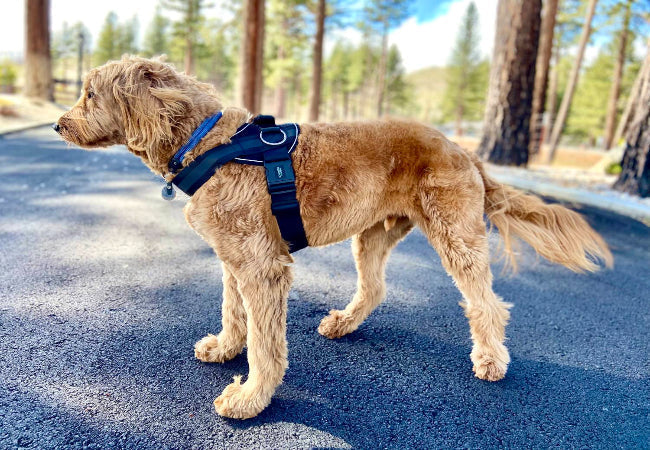
The Ideal Harness for Puppies: Woopf Explorer Harness
The Explorer Harness is used by vets, rescues, and first-time owners because it’s:
- Lightweight and breathable
- Adjustable in 4 zones for a secure puppy fit
- Escape-resistant for nervous dogs or first-time walks
- Built for training with a front and back clip
We’ve tested it on Goldens, Staffies, Cavoodles, Dachshunds, and dozens of shelter puppies. It’s the harness I put on my own dog, Kiko, during her first walks.
Research-Backed Reasons to Use a Harness
According to studies in PubMed and veterinary journals:
- Harnesses reduce tracheal pressure and cervical spine load in growing dogs
- Puppies trained in harnesses are less likely to develop leash reactivity
- Improper pressure on the neck can disrupt natural gait and behavior
Common Puppy Walking Mistakes to Avoid
- Using a collar as the only lead point
- Starting with long walks too soon
- Ignoring signs of harness discomfort or poor fit
- Using retractable leashes or heavy gear too early
How to Start Puppy Leash Training (With Woopf Gear)
- Step 1: Let your puppy sniff the harness. Clip it on indoors for 1–2 minutes.
- Step 2: Use high-value treats and short, positive sessions.
- Step 3: Add a lightweight lead (Sealskin Lead) and let them drag it around safely.
- Step 4: Move to your backyard or hallway for low-distraction walks.
- Step 5: Gradually build to street walks once your puppy is vaccinated and confident.
What Puppy Parents Say
“Our vet told us not to use a collar for walks. Woopf was the only harness our Cavoodle didn’t freak out in—and she walks better every day.” – Tara N.
“The Explorer Harness fit my Dachshund puppy snugly and never rubbed her belly or front legs. So easy to adjust.” – Liam G.
Complete Puppy Walking Setup
- Explorer Harness – Secure, gentle, no-pull support
- Sealskin Lead – Lightweight and waterproof
- Dual Pocket Dispenser – Reward training + carry cleanup in one
Final Thoughts
Your puppy’s first walks are about learning, bonding, and building confidence. Using a harness that fits well and feels safe is the first step in making that experience positive.
Start your puppy off with vet-designed gear—and set them up for a lifetime of happy, healthy walks.
Recommended by Dr Duncan
Vet-designed gear for what you have just read about.
- エクスプローラー引っ張り防止ハーネスShop
No-pull training harness with adjustable fit
- Poop & Go 100%堆肥化可能バッグShop
100% compostable & plant-based
- エクスプローラーバンジーリードShop
Run together. Designed for pullers & high-energy dogs