



If your dog turns every walk into a sled race, you’ve probably heard two suggestions: try a harness or use a head collar. But which actually works—and which is safer?
As a veterinarian and founder of Woopf, I’ve helped train and treat thousands of dogs with leash-pulling issues. In this guide, I’ll break down the real differences between harnesses and head collars, so you can make the best, safest choice for your dog.
Quick Comparison Table
| Feature | Harness | Head Collar |
|---|---|---|
| Controls Pulling | Yes (front-clip) | Yes (via head redirection) |
| Risk of Injury | Low | Moderate (neck strain if misused) |
| Dog Comfort | High | Often disliked or resisted |
| Ease of Use | Easy to fit | Needs training |
| Recommended by Vets | Yes (most cases) | With caution |
What Is a Dog Harness?
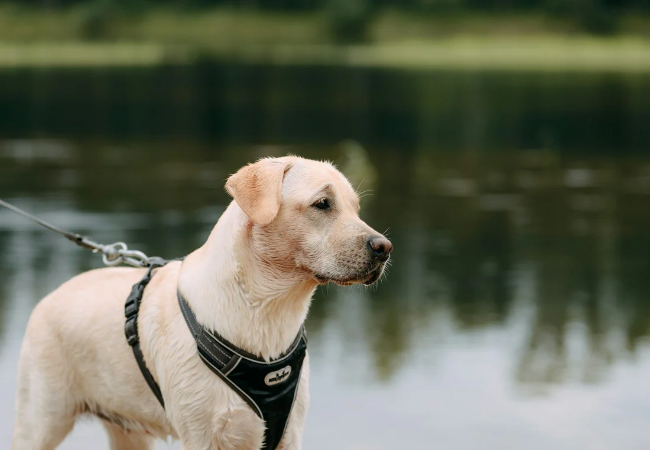
A harness fits around your dog’s torso and distributes pressure across the chest and shoulders. It avoids the throat and is especially helpful for:
- Strong pullers
- Flat-faced or small-breed dogs
- Long walks and active lifestyles
Best Pick: The Woopf Explorer Harness with a front clip for no-pull training.
What Is a Head Collar?
A head collar (like the Halti or Gentle Leader) loops around your dog’s muzzle and attaches beneath the chin. It gently redirects the head when they pull, controlling their direction like a horse halter.
Pros:
- Very effective at stopping forward momentum
- Useful for dogs too strong for their owners
Cons:
- Many dogs resist wearing it
- Can cause neck strain if your dog lunges suddenly
- May lead to pawing or rolling to remove it
What Vets and Studies Recommend
Research in the Elsevier Journal of Animal Behaviour shows that harnesses reduce pressure on the cervical spine and encourage a natural gait—making them safer for daily use.
Head collars should only be used with proper training and never for prolonged periods or without supervision. They’re best as short-term tools, not long-term walking gear.
When to Use a Harness
- Your dog pulls occasionally or moderately
- You want a daily walk setup
- You need safety, comfort, and training support
When to Consider a Head Collar (Short-Term)
- Your dog is extremely strong and pulling is dangerous
- You are training leash manners under professional guidance
- Other gear has failed, and you need temporary control
Combine With Training for Best Results
Neither tool is magic. Use positive reinforcement, loose-leash walking techniques, and consistent training to reduce pulling. Always reward good leash behavior and redirect before tension builds.
Products to Support No-Pull Training
- Explorer Harness – Front/back clip, reflective design
- Bungee Lead – Absorbs shock from sudden pulls
- Dual Pocket Treat Bag – Reward good leash behavior fast
Final Thoughts
For most dogs, a front-clip harness is the best long-term walking solution. It offers control without discomfort, supports proper gait, and helps train loose-leash walking safely. Head collars may work short-term—but come with risks and require patience.
Choose vet-designed harnesses at Woopf.com and start walking with confidence today.
Recommended by Dr Duncan
Vet-designed gear for what you have just read about.
- Harnais Anti-Tirage ExplorerShop
No-pull training harness with adjustable fit
- Sacs Poop & Go 100% CompostablesShop
100% compostable & plant-based
- Laisse Élastique ExplorerShop
Run together. Designed for pullers & high-energy dogs