




Elevated dog beds look a bit like a camping stretcher for your dog: a taut fabric panel on a frame, sitting a few centimeters off the ground. You see them on patios, in backyards, at campsites and in the homes of dogs who have personally destroyed every cushion they've ever been given.
They're easy to hose down and almost impossible to dig a hole in. But are they actually good for dogs, or just good for owners? The honest answer depends on your dog. Here's who a raised bed suits, who it doesn't, what to know about sore joints and hot days, and how to get your dog using one.
Quick answer
For many healthy dogs, yes. An elevated bed keeps your dog off hot, cold or damp ground, lets air move underneath and has no stuffing to dig out. It's firm, though, and needs a step up, so older dogs and dogs with sore joints or trouble getting up usually do better on a soft, cushioned bed.
What is an elevated dog bed?
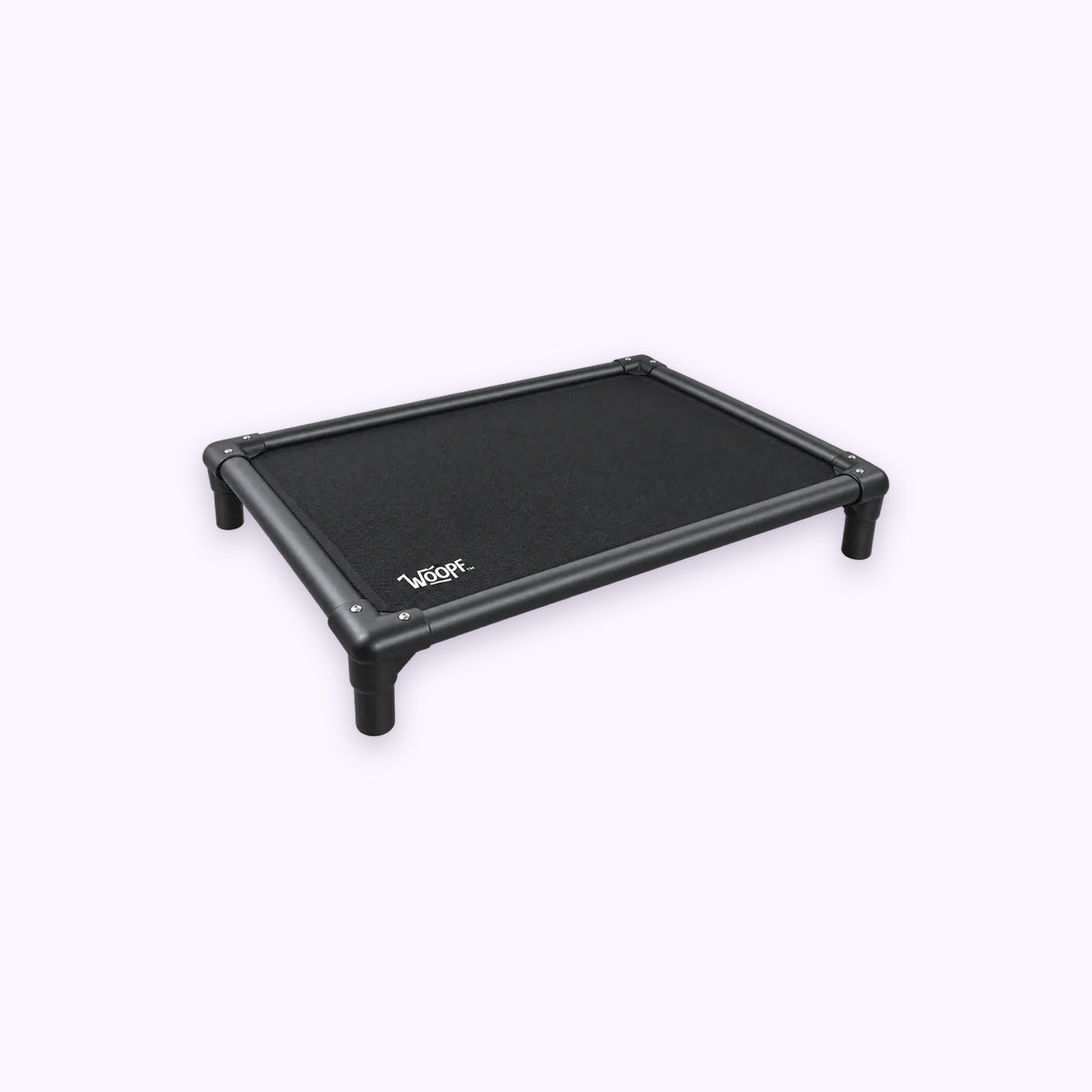
An elevated dog bed, also called a raised bed, dog cot or hammock bed, is a sheet of tough fabric or mesh stretched tight over a frame. The frame holds the sleeping surface off the floor, so your dog lies on the fabric, not on the ground.
It's a different thing from a cushioned or foam bed. There's no padding, no bolster to lean on and nothing to sink into. Your dog's weight is spread across the fabric like a trampoline that doesn't bounce. Some dogs love that. Others would rather curl up in a nest.
The upside of a raised bed
- Off the ground. Hot pavers, cold concrete, wet grass and dusty floors stay under the bed, not under your dog. Animal welfare groups advise that an outdoor kennel should be dry, draft-free and off the ground, and the same thinking applies to an outdoor bed.
- Air underneath. Air can move under the sleeping surface, which many dogs appreciate in warm weather.
- Nothing to dig out. With no foam or stuffing, there's nothing for a determined digger to pull out and spread across the yard.
- Easy to clean. Mud, sand and the odd accident can be hosed or wiped off.
- Goes anywhere. Patio, backyard, camping trip or the corner of the living room.
- Gets big dogs off hard floors. Big, heavy dogs that lie on concrete or other hard floors are prone to calluses, thickened patches of skin over pressure points such as the elbows and hocks. Dogs with a hygroma, a problem caused by repeated pressure on the point of the elbow, are usually better on soft padding, so ask your vet before choosing a firm cot.
The downside of a raised bed
- It's firm. There's no cushioning, and for some dogs that's the whole problem.
- There's a step. The sleeping surface sits off the floor, so your dog has to step up and down every time.
- No snuggle factor. Dogs that like to curl up tight, burrow or lean against a bolster may not settle on a flat, open surface.
- Chilly on cold nights. The same airflow that's welcome in summer can make a cot feel cool in winter. A blanket on top, or a cushioned bed indoors, helps.
- Chew-resistant isn't chew-proof. Tough fabric slows a chewer down, but a dog that's set on it can still damage the edges.
Which dogs do well on a raised bed, and which don't?
| Often a good fit | Often better on a cushioned bed |
|---|---|
| Healthy adult dogs that sleep stretched out | Older dogs and dogs with stiff or sore joints |
| Dogs that dig at or shred cushioned beds | Dogs that struggle to get up, or lie down most of the day |
| Dogs that lounge outside on a patio or deck | Dogs that like to curl up, burrow or lean on a bolster |
| Dogs that come in wet, muddy or sandy | Dogs with elbow problems such as a hygroma |
| Camping, road trips and the beach | Dogs that find even a small step hard |
You don't have to pick just one. A raised bed outside and a cushioned bed indoors gives your dog the choice, and they'll usually show you which one they prefer.
Which dogs does vet Dr Duncan Houston think do better on a raised bed?
Dr Duncan's advice: Ones that tend to like cooler places, and also if you live in a warm, hot or humid environment.
Are raised beds good for dogs with sore hips?
This is the big question, and it's easy to mix up "off the ground" with "good for joints". They aren't the same thing.
For a dog with arthritis or sore hips, the usual advice is a soft, comfortable bed that's easy to get on and off, plus ramps instead of steps where you can. Our own hammock's page says the same about its design: its firm surface and step may not suit dogs needing softer cushioning or easier access.
If your dog is newly stiff after rest, limping, or groaning and careful when lying down or getting up, book a vet check, because those can be signs of arthritis or another painful problem, and a new bed won't fix that.
Can a raised bed still work for a dog with sore hips? Dr Duncan's answer:
Dr Duncan's advice: Yes, they can be, as long as your dog likes to use them. Mine are not that firm, so they're okay.
Using a raised bed outside: heat, shade and water
A raised bed is great for the patio, but it doesn't make a hot day safe. Dogs can get heatstroke, and flat-faced breeds, thick-coated dogs, puppies and seniors are more at risk.
- Keep the bed in the shade, and move it as the shade moves during the day.
- Put fresh water right next to it.
- On hot days, bring your dog inside to a cooler spot.
When it's an emergency
If your dog is panting heavily, drooling a lot, wobbly, vomiting or collapses in the heat, cool them with water first, then get them to a vet straight away. Call ahead on the way so the clinic is ready.
Keeping it safe and in good shape
- Check it weekly. Look over the fabric edges and seams, and make sure the corner joints are still secure.
- Watch the chewers. If your dog starts working on an edge, take the bed away until you can supervise. If your dog chews off and swallows any fabric, call your vet straight away.
- Set it on flat ground. A level bed doesn't rock, so your dog feels steady stepping on and off.
- Let it dry. After a hose-down, let the panel dry before your dog settles on it again.
How to get your dog using a raised bed
- Pick the right size. Measure your dog lying flat, nose to the base of the tail, and allow room inside the frame.
- Put it somewhere they already like to rest. Near their favorite patio spot or the corner they always pick.
- Make it rewarding. Drop a few treats on the panel and let your dog investigate in their own time. Reward any step onto it.
- Never force it. Lifting a nervous dog onto a new surface can put them off. Let them choose.
- Add something familiar. A blanket that smells like home can help a reluctant dog give it a go, especially in cooler weather.
Common mistakes
- Choosing a bed for a stiff dog without checking the step. Make sure a dog with sore joints can get on and off easily, and ask your vet which surface suits them.
- Leaving it in full sun. Shade and water matter more than the bed itself on a hot day.
- Treating chew-resistant as chew-proof. Supervise dogs that chew until you know how they treat it.
- Sizing by the outer frame. The sleeping panel is smaller than the frame measurements, so a snug fit on paper can be cramped in real life.
- Forcing a nervous dog onto it. Patience and treats work much faster than lifting.
The WOOPF™ Dog Hammock
Here's what our Dog Hammock page lists.
- Steel frame: a taut fabric panel on a steel-tube frame, with no foam or stuffing to pull out.
- Airflow underneath: the sleeping surface sits 15 cm (6 in) above the ground, so air can circulate beneath your dog.
- Two covers included: a PVC cover for rain and mud, and a breathable mesh cover for warmer weather.
- Three sizes: Medium is 90 × 59.5 × 15 cm (35 × 23 × 6 in), Large is 103 × 69.5 × 15 cm (41 × 27 × 6 in) and Extra large is 127.5 × 95.5 × 15 cm (50 × 38 × 6 in), all outer frame measurements. The sleeping panel is smaller, so if your dog is between sizes, go up.
- Easy care: hose or wipe clean and let the panel dry. Check the fabric edges and seams weekly, and check the corner joints stay secure.
- Where it works: the patio, yard, camping or indoors. Keep it in the shade with fresh water available.
The page is honest about the limits too. The fabric is chew-resistant, not chew-proof, and its firm surface and 15 cm (6 in) step may not suit dogs needing softer cushioning or easier access. For those dogs, have a look at the rest of our Dog Beds & Comfort range.
Frequently asked questions
Do dogs like elevated beds?
Many do, especially dogs that sleep stretched out or love lying outside. Dogs that curl up tight or like to burrow often prefer something softer with sides. Offering a choice is the easiest way to find out.
Are elevated dog beds good for older dogs?
It depends on the dog. Many older dogs have stiff joints, and the usual advice for them is a soft bed that's easy to get on and off. If your older dog has started struggling to get up or lie down, see your vet.
Can I use an elevated dog bed indoors?
Yes. Raised beds work on a hard floor indoors too, and they're handy for dogs that shred cushioned beds. Put a non-slip mat underneath on very smooth floors if it slides.
Do elevated beds keep dogs cool?
Air can move under the panel, which helps a dog feel less like they're lying on a hot slab. A raised bed isn't a cooling device, though. On a warm day, shade, fresh water and a cooler spot indoors do the heavy lifting.
Keep going
If your dog is getting older or stiffer, our guide to managing dog arthritis at home covers the other changes that help around the house.
For the medical side, ASK A VET™ has more depth in A Home Care Plan for a Dog with Arthritis and Dog Panting in Hot Weather: Heatstroke Signs and What to Do.
Not sure whether your dog's stiffness or panting needs a vet? More dog health help lives at ASK A VET™.
Recommended by Dr Duncan
Vet-designed gear for what you have just read about.
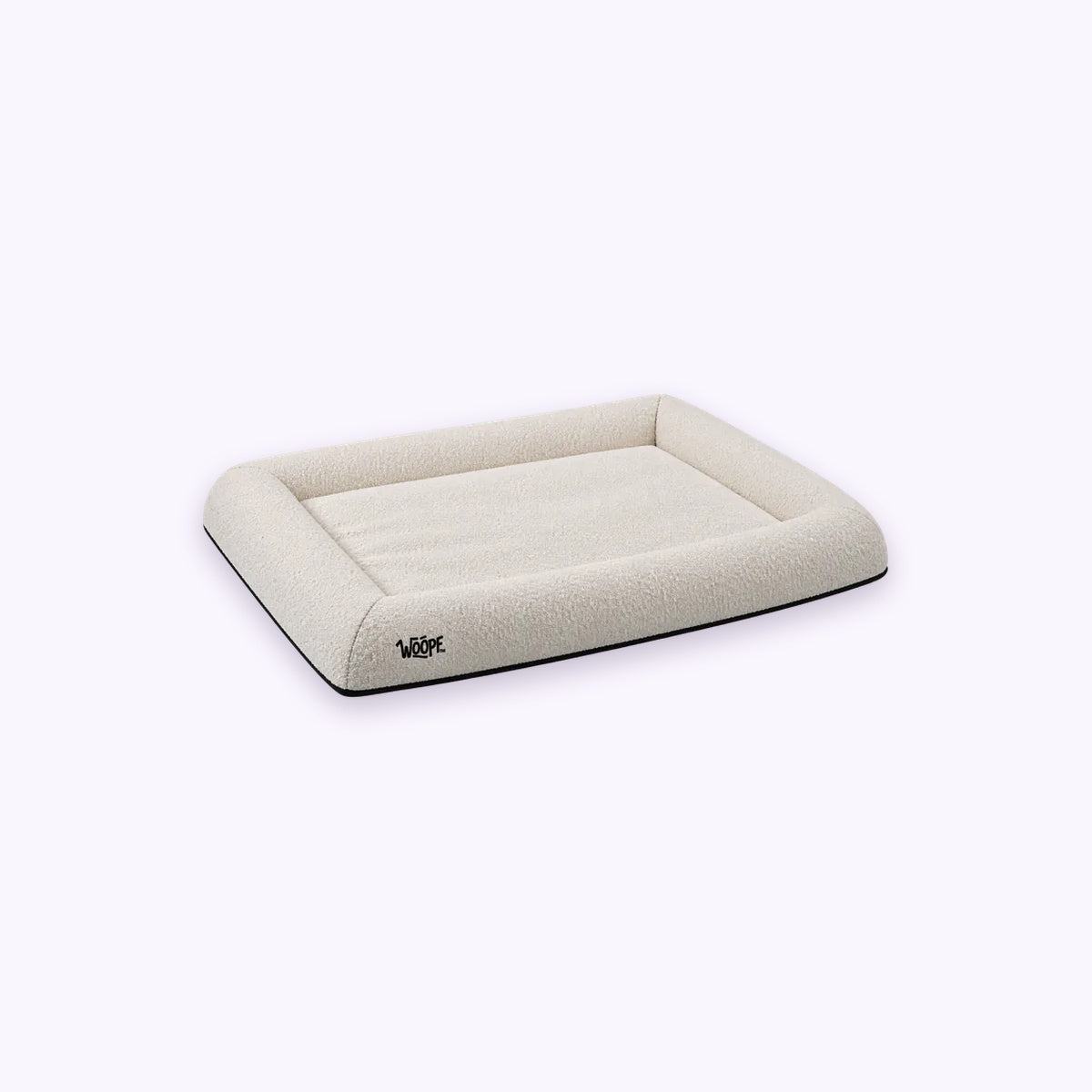
- SNÜZ Orthopedic Bouclé BedShop
Joint support, deeper sleep & pressure relief
- Chew-Proof Dog HammockShop
For dogs that break beds, built for outdoor use
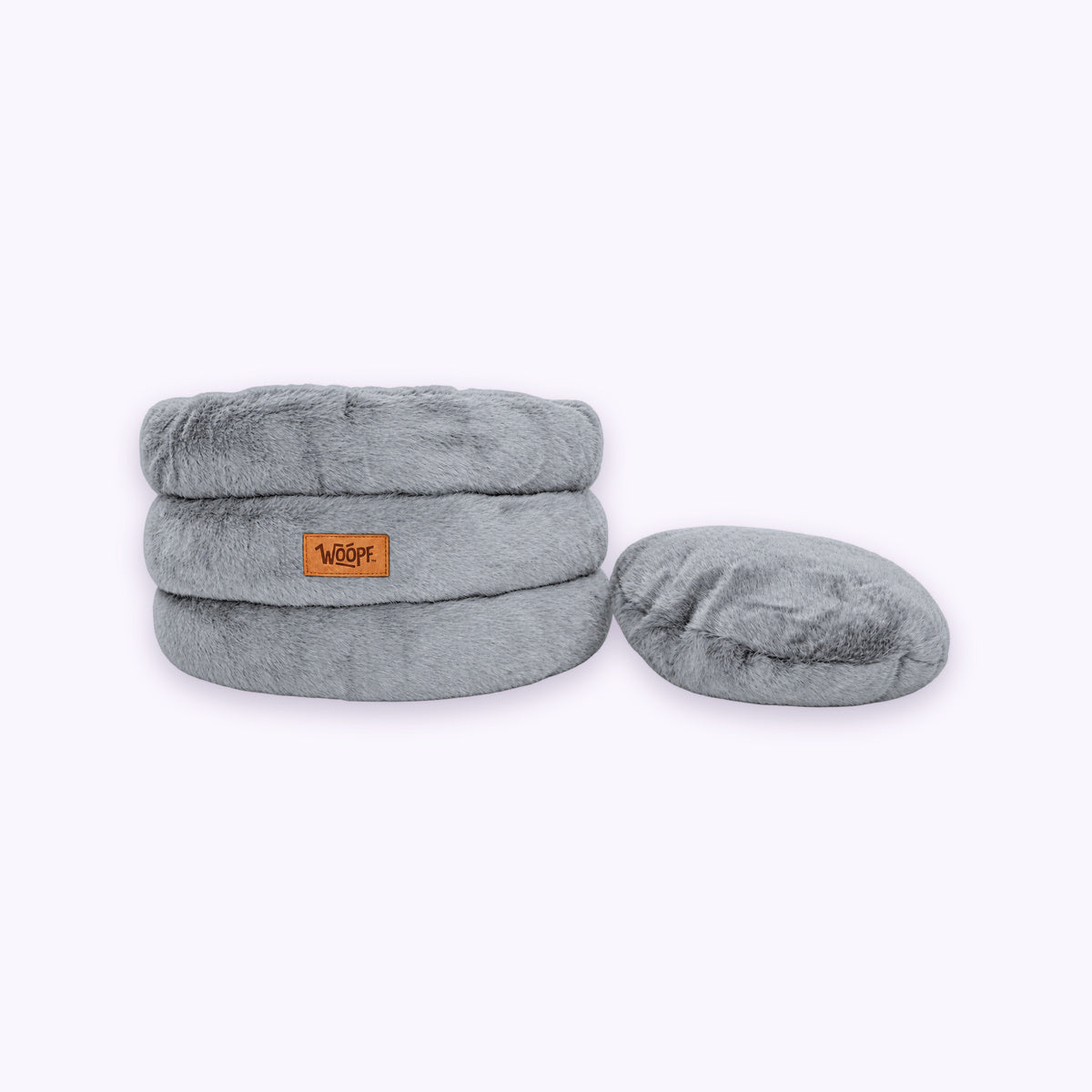
- Furry Range Round BedShop
Helps anxious dogs feel safe, settle faster, and sleep deeper