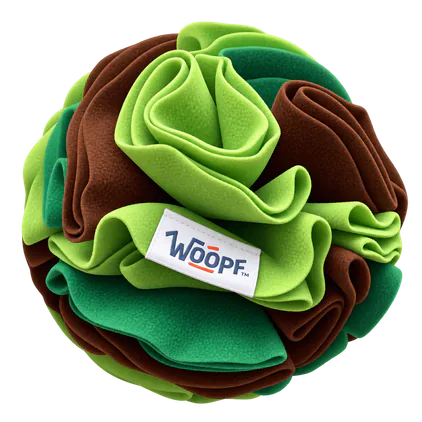


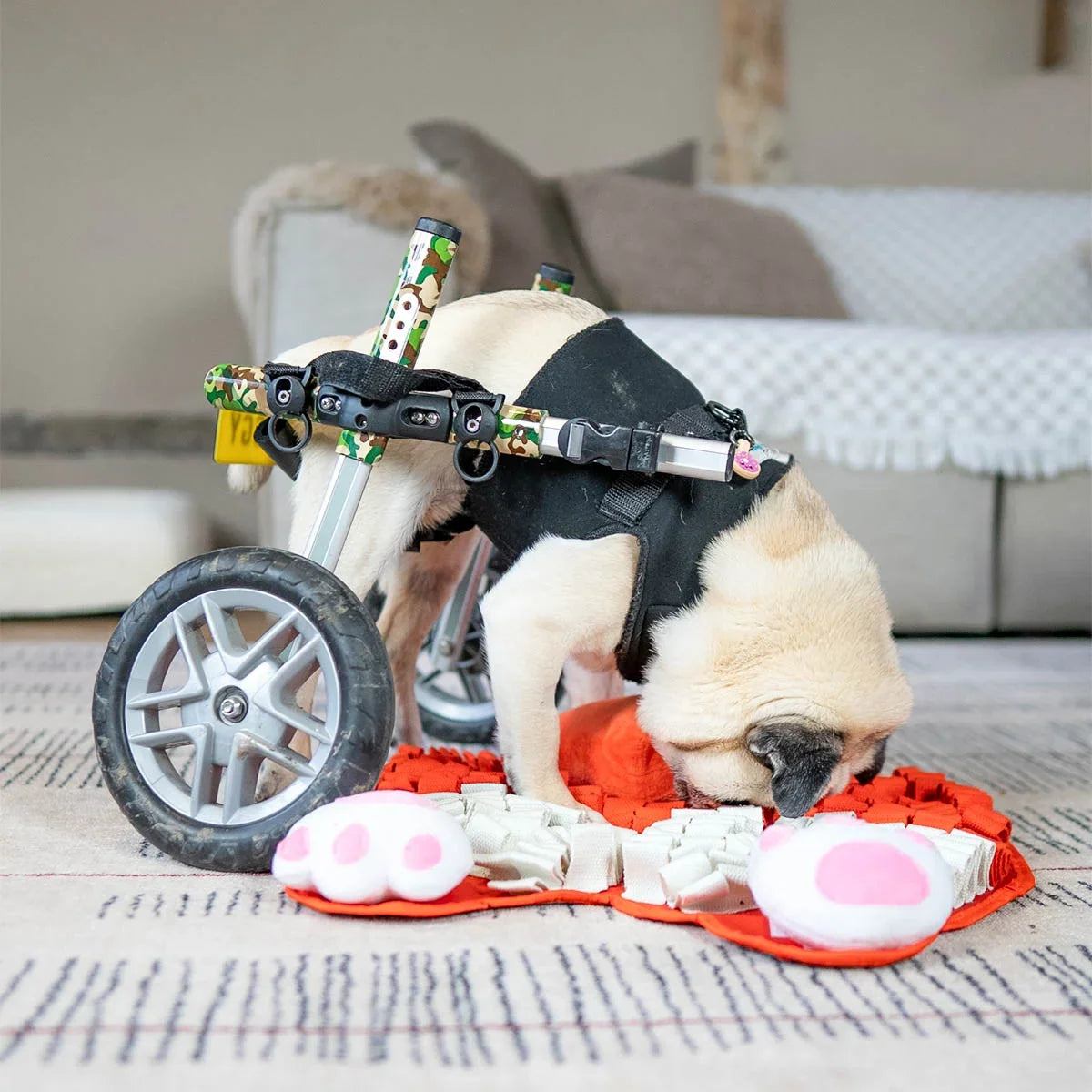


A snuffle mat looks like a small shaggy rug that's having a very bad hair day. Hide some kibble in it, put it down, and your dog spends the next while nose-down, rooting through the fabric for every last piece.
It's one of the simplest bits of enrichment you can buy or make, and one of the easiest to get slightly wrong. Some dogs dig in straight away. Others sniff the top, look at you and wander off. Here's how a snuffle mat works, how to get your dog using one, what to put in it, and how to keep snuffle time safe.
Quick answer
Scatter a little dry food on top of the mat so it's easy to find, then hide it deeper as your dog gets the hang of it. Use food from their daily allowance, stay in the room, and pick the mat up when it's empty. It's a sniffing job for the brain, not a chew toy.
What is a snuffle mat, and how does it work?
A snuffle mat is a mat covered in loops, strips or folds of fabric. You scatter dry food or small treats over it and let the pieces fall down between the strands. Your dog then uses their nose to find each piece and works it out with their mouth or paws, one bit at a time.
Sniffing is a natural behavior and one of the main ways dogs learn about the world around them. That's why dog welfare charities list snuffle mats among their scent and feeding enrichment ideas, and Dogs Trust even shows owners how to make one at home from an old fleece and a rubber mat with holes.
What a snuffle mat really does is turn a few seconds of eating into several minutes of searching. Our own Snuffle Mat page puts it as a 30-second bowl becoming 15 to 20 minutes of nose work.
Why it tires dogs out
Searching for food takes focus. Dogs Trust suggests sniffing for treats as a safe way for a hyper dog to use up energy, and lots of sniffing at the end of a busy game to help a dog relax. A review of enrichment for dogs kept in research facilities describes nose work as a calm activity which is mentally tiring, and names snuffle mats as one simple way to provide it.
That's the appeal for owners: the hard work happens on the mat, in the living room, rather than on yet another lap of the park.
What the research says (and doesn't)
There's very little research on snuffle mats themselves. In one study, 38 pet dogs were offered the same food in two places at once, half on a plain tray and half hidden in a homemade fleece snuffle mat. As a group, the dogs didn't prefer the mat, but they were willing to use it, and the researchers saw a lot of switching back and forth between the two while free food was still on the tray.
So think of a snuffle mat as a way to make part of a meal more interesting, not as something every dog will choose over an easy dinner. It adds to walks, play and training. It doesn't replace them.
How to use a snuffle mat, step by step
- Start on the surface. Scatter a few pieces of dry food or small treats on top of the strands, where your dog can see and smell them. The first job should be an easy win.
- Pick a calm spot. Somewhere quiet, away from other pets, on a hard floor if your mat uses suction cups.
- Let them work it out. Stay nearby, but don't jump in to help unless they're truly stuck. The sniffing and nudging is the point.
- Make it harder, slowly. Once your dog is confident, push the food deeper between the loops so it takes more searching to find.
- Pick it up when it's empty. A finished mat isn't a toy. Lift it away once your dog has found everything.
- Shake it out and wash it. Crumbs and drool build up in the fabric, so shake it out after each use and wash it regularly, following the care label.
Some dogs dig in from the first sniff. Others need a bit more help to understand that the food is hiding in there. If your dog sniffs once and walks away, go back a step: put more food on top where it's easy to find, and keep the first few sessions short so they end with a win.
For a dog that gives up quickly, here's what vet Dr Duncan Houston suggests:
Dr Duncan's advice: Find high-value treats, or get a snuffle mat with squeaker attachments and removable toys to build engagement.
Our own Snuffle Mat, further down, has a soft toy face with squeakers inside, held on by velcro, that pulls off for a game once the loops are empty.
What to put in a snuffle mat
Dry food is the way to go. Kibble or small, dry treats drop between the strands and stay put, and they don't leave the fabric greasy. Our Sniff & Snuffle Bundle page says to avoid wet or greasy food in the mat.
Whatever goes in the mat counts as food. Take it out of your dog's daily allowance, or that fun new habit quietly adds up on the scales.
If your dog is on a prescription diet, has food allergies or a sensitive stomach, fill the mat with their usual food and check with your vet before adding anything new.
If your dog needs to lose weight, a recent vet review on overweight pets lists a snuffle mat among the ways to slow eating and add activity to mealtimes, so ask your vet about serving part of their measured ration this way.
Some owners serve a whole meal from the mat, while others keep it for a handful of treats or part of breakfast. Which is right? Dr Duncan's answer:
Dr Duncan's advice: You can do both. It depends on what training you are using it for.
Keeping snuffle time safe
- It's a foraging toy, not a chew toy. Fabric loops are easy to pull apart. If your dog starts chewing or ripping the strands, pick the mat up and give them a sturdier chew toy instead.
- Check it after every session. Retire any mat or toy that tears or shows a squeaker.
- Swallowed fabric is a vet call. If your dog chews off and swallows any fabric or a squeaker, call your vet straight away rather than waiting to see what happens.
- One dog, one mat. In a multi-dog home, or with a dog that guards food, give each dog their own mat in a separate room or behind a baby gate, and pick the mats up once they're empty.
- Stay in the room. Snuffle sessions are short, so staying nearby is easy, and you'll spot chewing early.
Both of our snuffle mat pages ask you to supervise snuffle time. Should that be every time? Dr Duncan's answer:
Dr Duncan's advice: Yes, snuffle-mat time should always be supervised.
How often, and for how long?
Every day is fine for most dogs, as long as the food comes out of their allowance. Dogs Trust suggests giving enrichment daily and spreading it through the day, and it names the snuffle mat as a handy thing to bring out when a puppy gets overexcited.
A session lasts as long as the food does. Once the last piece is found, the mat goes away until next time, which also keeps it special.
Common mistakes
- Hiding everything deep on day one. A dog that can't find anything decides the mat is boring. Start on the surface.
- Using wet or greasy food. It soaks into the fabric, makes a mess and is hard to wash out.
- Leaving a chewer alone with it. That's how loops get ripped out and swallowed.
- Forgetting to count the food. Snuffle-mat snacks are still calories.
- Two dogs, one mat. Even friendly dogs can squabble over food.
- Skipping the wash. Crumbs and drool in the fabric get grubby fast.
- Expecting it to replace a walk. It's a great extra, not a substitute for exercise, play and company.
The WOOPF™ Snuffle Mat
Here's what our Snuffle Mat page lists.
- Dinner as a puzzle: stitched loops that hide a meal for the nose to find.
- A face that comes off: a soft toy with squeakers inside, held on by velcro, so your dog can have a game once the loops are empty.
- Held down: a grip base plus three suction cups on elastic loops, so the mat stays put instead of being shaken across the floor. The suction cups hold on flat floors, not carpet.
- Four designs: Avocado, Strawberry, Corgi Butt and Bumble Bee, each in one size, from 45 × 35 cm (18 × 14 in) to 45 × 45 cm (18 × 18 in), for any dog and for cats.
- Easy care: toys off, crumbs out, then machine wash the mat cold on a gentle cycle and air dry it flat. Wash the toys by hand or in a laundry bag.
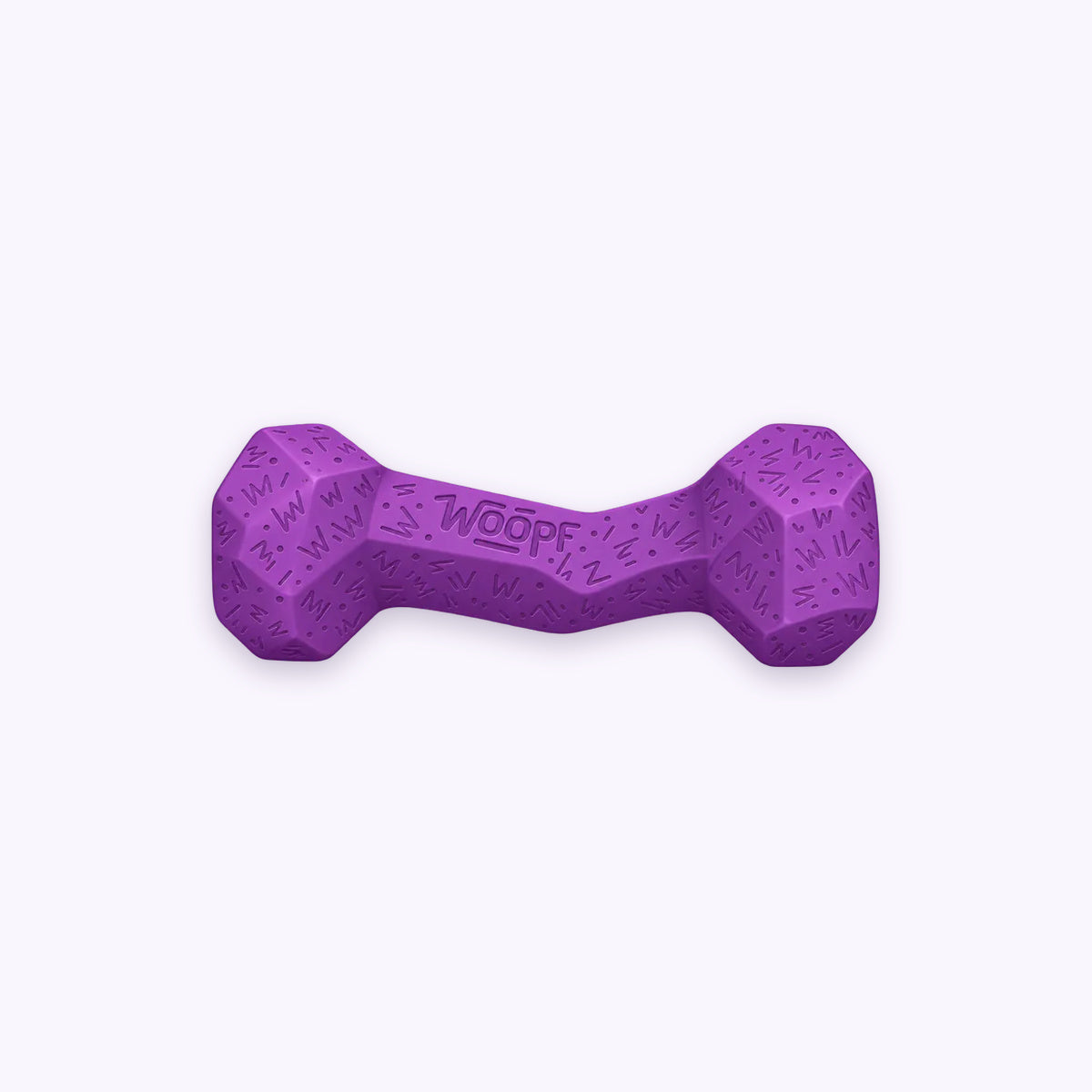
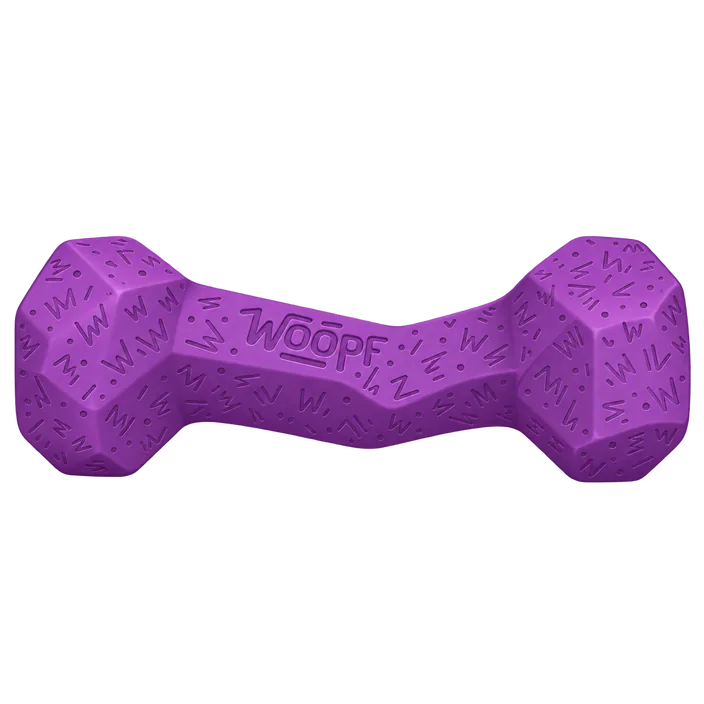
The page is clear about the limits too: it's a foraging toy, not a chew toy, so stay in the room, and give a dog that shreds soft toys a Chewster Blocky Bone instead.
If you'd like a second way to forage, the Sniff & Snuffle Bundle pairs one Snuffle Mat with a Snuffle Ball.
Frequently asked questions
Do snuffle mats really tire dogs out?
They can help. Searching for food is brain work, and dog welfare charities suggest sniffing games to help dogs use up energy and settle. A snuffle mat adds to walks and play, though. It doesn't replace them.
Are snuffle mats good for puppies?
Yes, with you in the room. Puppies chew everything, so start easy, use their own food, watch for nibbling at the loops and pick the mat up as soon as it's empty.
Can I put wet food in a snuffle mat?
Stick to dry food. Wet food soaks into the fabric and is hard to wash out. If your dog loves wet food, a lick mat suits it better.
How do you clean a snuffle mat?
Take any toys off, shake out the crumbs and wash the mat on a cold, gentle cycle, then let it air dry. Check the care label on your own mat first.
Keep going
If your dog enjoys working for food, a lick mat is the slower, quieter cousin of the snuffle mat: read are lick mats good for dogs? for how to use one well.
For more nose games, and what to do if your dog eats a snuffle mat, ASK A VET™ has easy scent games for dogs.
Not sure whether a snuffle mat suits your dog? More dog health help lives at ASK A VET™.
Recommended by Dr Duncan
Vet-designed gear for what you have just read about.
- Chewster Blocky BoneShop
For power chewers. Roll, chase & earn treats through chew play
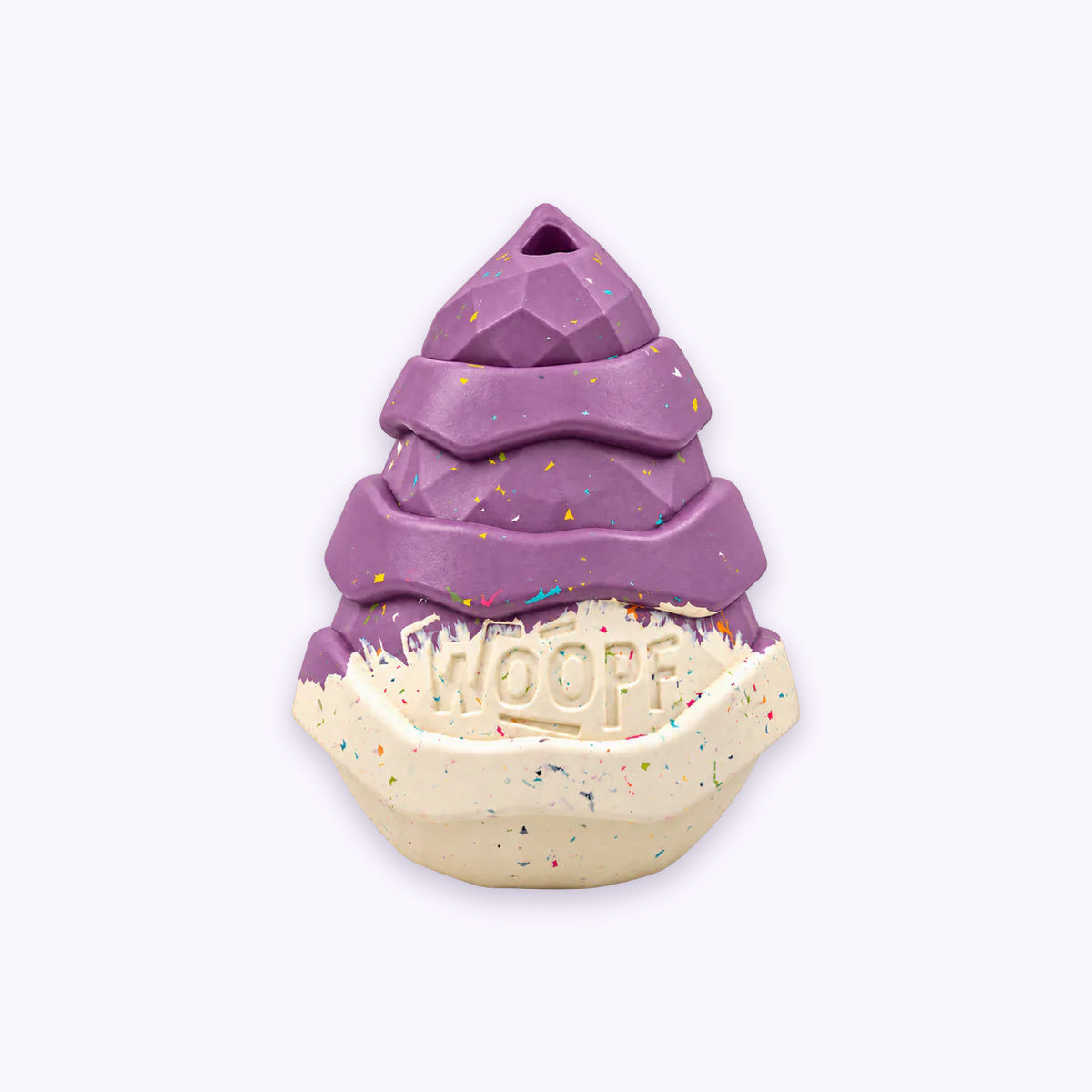
- Chewster Snacky HiveShop
For power chewers. Hide meals inside for slow-feed play
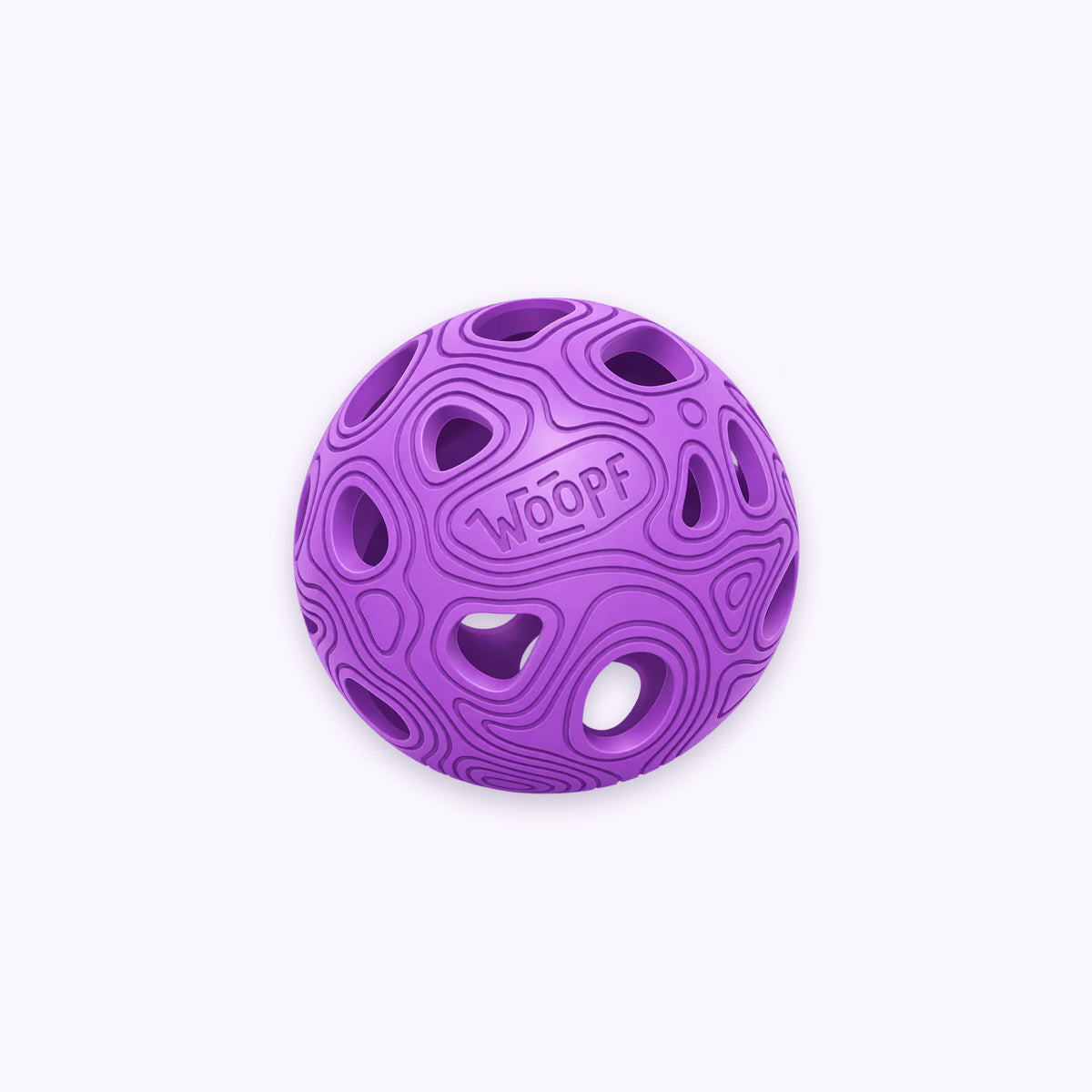
- MeteorBite Ball 2 PackShop
For high-energy dogs. High-bounce fetch keeps them active longer