


Putting on a dog harness should be simple—but if you’ve ever wrestled a squirming pup or accidentally clipped it backward, you’re not alone. A poorly fitted harness can lead to discomfort, pulling, or even escape.
As a veterinarian and designer at Woopf, I created this step-by-step guide to ensure your dog’s harness fits comfortably, safely, and securely—every single time.
🔍 Why Proper Fit Matters
An ill-fitted harness can cause:
- Chafing under the armpits or chest
- Restricted shoulder movement
- Pressure on the trachea (especially dangerous for flat-faced breeds)
- Increased pulling behavior due to poor control
Peer-reviewed veterinary studies (PubMed, Elsevier) show that harness design and fit can influence both physical health and behavior.
🛠️ What You’ll Need
- Your dog’s correct size harness (like the Woopf Explorer Harness)
- Adjustable lead (like our Sealskin Lightweight Lead)
- Treats for positive reinforcement
📸 Step-by-Step: How to Put on the Woopf Explorer Harness
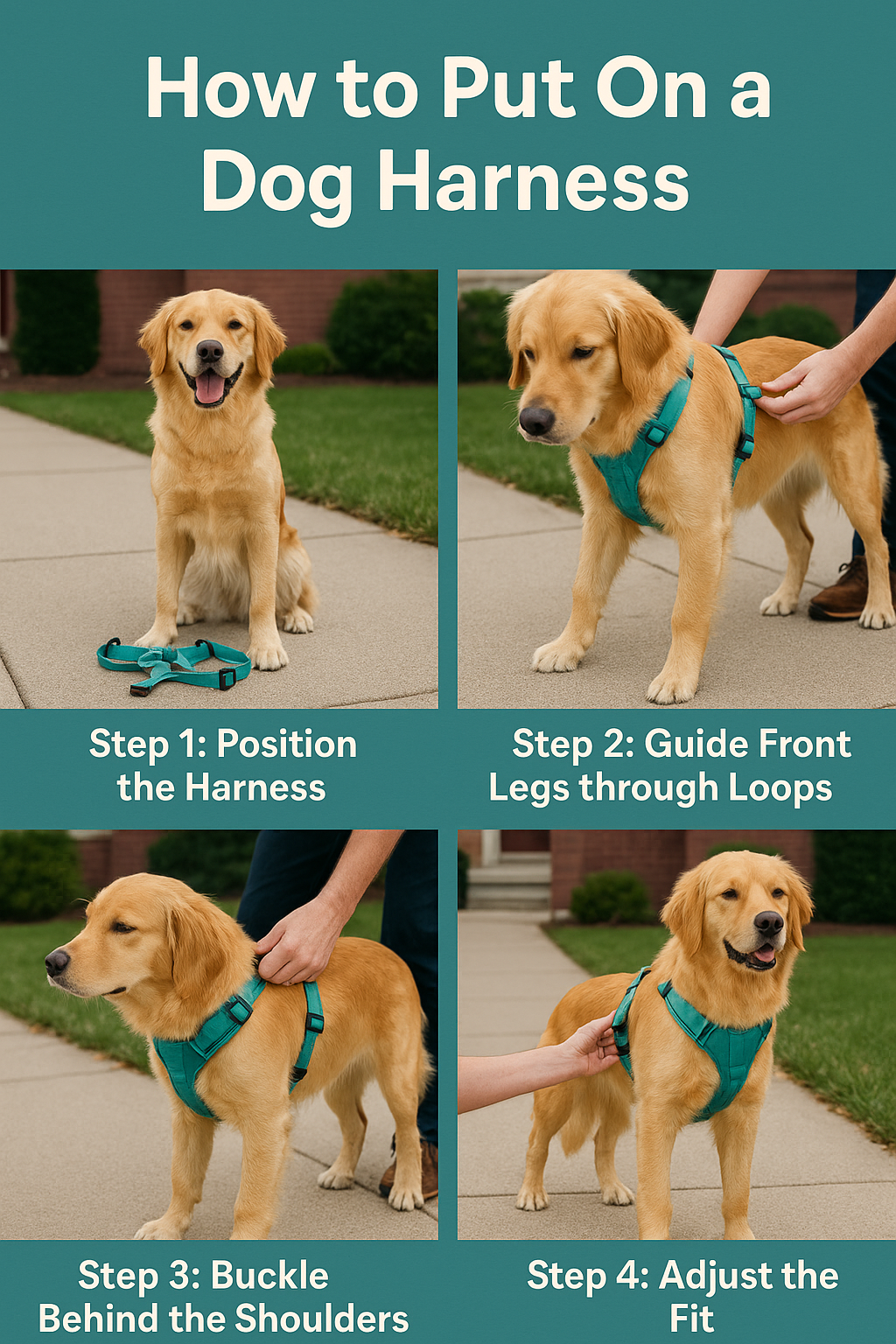
Step 1: Position the Harness Correctly
Identify the front chest piece (usually Y-shaped or padded) and place it on the floor. The two shoulder straps should form loops.
Vet Tip: The D-ring clip for the lead should face your dog’s back, not their neck.
Step 2: Guide Front Legs Through Loops
Lift one paw at a time and gently guide it through each side of the chest piece. The harness should rest on their sternum, not their neck.
Step 3: Buckle Behind the Shoulders
Once the front is aligned, bring the straps up and buckle securely behind the shoulders. You should hear a “click.”
Step 4: Adjust the Fit
You should be able to fit two fingers snugly between your dog and every strap. Too loose? They could slip out. Too tight? It could cause rubbing or strain.
Step 5: Clip the Lead & Reward
Attach the leash to either the front or back clip, depending on training goals. Reward your dog with treats and praise to build a positive association with the harness.
🐾 Back Clip vs Front Clip: Which One Should I Use?
- Back clip: Great for relaxed walkers or jogging
- Front clip: Helps redirect pulling and train calm leash walking
📏 Fitting Checklist
- No rubbing under armpits or chest
- Shoulders move freely
- Straps are even and not twisted
- D-ring clips are upright and secure
- Dog can sit, lie down, and walk without resistance
🧠 Troubleshooting: Common Issues
❌ Harness Keeps Twisting
Fix: Check that you’re not clipping the front and back straps incorrectly. Refer to the photo diagram on the Woopf product page.
❌ Dog Resists Harness
Fix: Build comfort through training. Let them sniff it, then give treats. Gradually increase wear time at home before walks.
🎁 Add-On Accessories
Pair your harness with our Explorer Dual Pocket Dispenser for treats and poo bags,
Conclusion
A well-fitted harness can transform your walks from chaotic to calm—and it's one of the easiest ways to boost your dog’s safety and comfort. With Woopf’s vet-approved gear, you're already on the right track.
Recommended by Dr Duncan
Vet-designed gear for what you have just read about.
- 探险者防拉扯背带Shop
No-pull training harness with adjustable fit
- Poop & Go 100%可堆肥袋Shop
100% compostable & plant-based
- 探险者弹力牵引绳Shop
Run together. Designed for pullers & high-energy dogs