



Does your dog bolt, cower, or freeze when you reach for their harness? You’re not alone—and your dog isn’t being dramatic. As a veterinarian and designer at Woopf, I’ve worked with hundreds of dogs who hated their harness, and in most cases, the fix was simple and stress-free.
Let’s walk through the 9 most common reasons dogs reject harnesses, what the science says, and how to help your pup feel safe and comfortable again.
1. The Harness Doesn’t Fit Properly
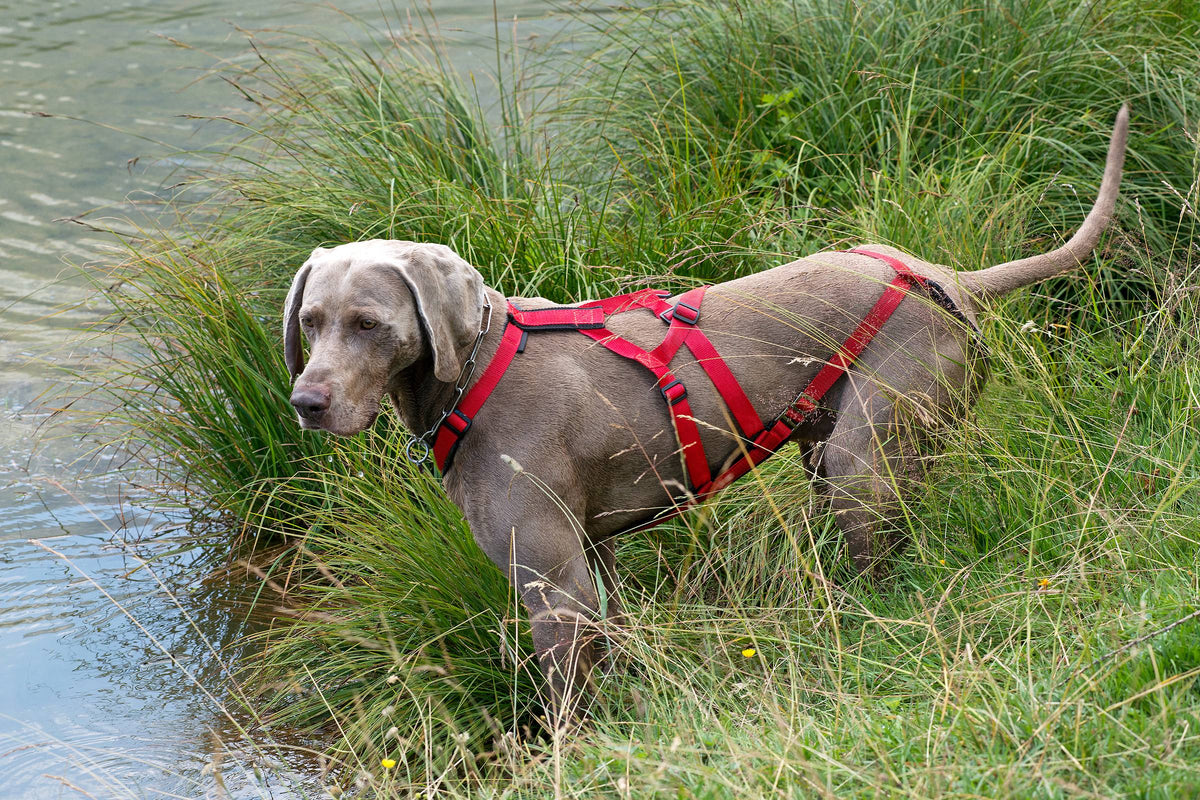
This is the #1 cause. If the harness is too tight, it can cause rubbing, nerve pressure, or even inhibit shoulder movement. If it’s too loose, it feels unstable and scary.
Fix: Use the two-finger rule and follow our full Woopf Fit Guide.
2. It Touches Sensitive Areas
Dogs don’t love pressure on their armpits, groin, or belly. If the harness presses on sensitive skin, they may try to bite, wiggle, or avoid it.
Fix: Choose a design like the Woopf Explorer Harness that avoids sensitive zones with Y-front ergonomic padding.
3. The Harness Makes Noises
Cheap buckles, velcro, or crinkly materials can startle noise-sensitive dogs. Some dogs associate the "click" sound with something negative.
Fix: Introduce it slowly with treats and choose high-quality, smooth-buckle designs like Woopf’s.
4. It’s Associated with a Negative Experience
If your dog got scared, punished, or injured while wearing the harness, they might have developed a fear association.
Fix: Reintroduce it positively. Lay the harness down, reward sniffing it, then gradually increase contact while rewarding.
5. Your Dog Was Never Desensitized
Dogs that weren’t exposed to harnesses during the socialization window (3–14 weeks) may struggle later in life.
Fix: Desensitization takes time and patience. Start indoors, keep sessions short, and use high-value rewards.
6. The Harness Restricts Their Movement
Shoulder pressure or poor strap placement can throw off your dog’s natural stride. This is especially harmful in growing dogs.
Science: Research in Elsevier’s Applied Animal Behaviour Science confirms restricted gait and long-term orthopedic risk from poorly designed harnesses.
Fix: Use a harness with full-range shoulder freedom and chest stability like the harnesses in our walking range (lightweight + low pressure).
7. It's Difficult or Awkward to Put On
Harnesses that go over the head, twist awkwardly, or require complicated steps can confuse or annoy your dog.
Fix: Try a step-in or quick-buckle style. All Woopf harnesses are designed for speed, ease, and low contact.
8. Your Dog Has Pain or Skin Issues
Dogs with arthritis, post-surgical soreness, or dermatitis may flinch when touched or harnessed.
9. The Harness Is Low Quality or Worn Out
Cheap materials can pinch, fray, or create pressure points. Worn-out straps lose structure and cause uneven pulling or slipping.
Fix: Invest in premium, vet-designed gear like the Woopf Explorer or Sealskin Waterproof Harness.
How to Help Your Dog Learn to Love Their Harness
Step 1: Let them sniff and explore the harness off-body with no pressure.
Step 2: Touch their body with it gently while rewarding.
Step 3: Clip it on for a few seconds, then remove it and reward.
Step 4: Increase wear time gradually indoors before going on walks.
Use a dual pocket dispenser to keep treats on hand while training.
Products That Make Harness Time Better
- Explorer Harness: Fully adjustable, padded, escape-resistant
- Pocket Raincoat: Helps fearful dogs feel protected on walks
Conclusion
If your dog hates their harness, don’t panic—and don’t give up. It’s usually a fixable issue with the right combination of fit, patience, and positive reinforcement.
Recommended by Dr Duncan
Vet-designed gear for what you have just read about.
- 探险者防拉扯背带Shop
No-pull training harness with adjustable fit
- Poop & Go 100%可堆肥袋Shop
100% compostable & plant-based
- 探险者弹力牵引绳Shop
Run together. Designed for pullers & high-energy dogs